Samsung vs Xiaomi: A Guide
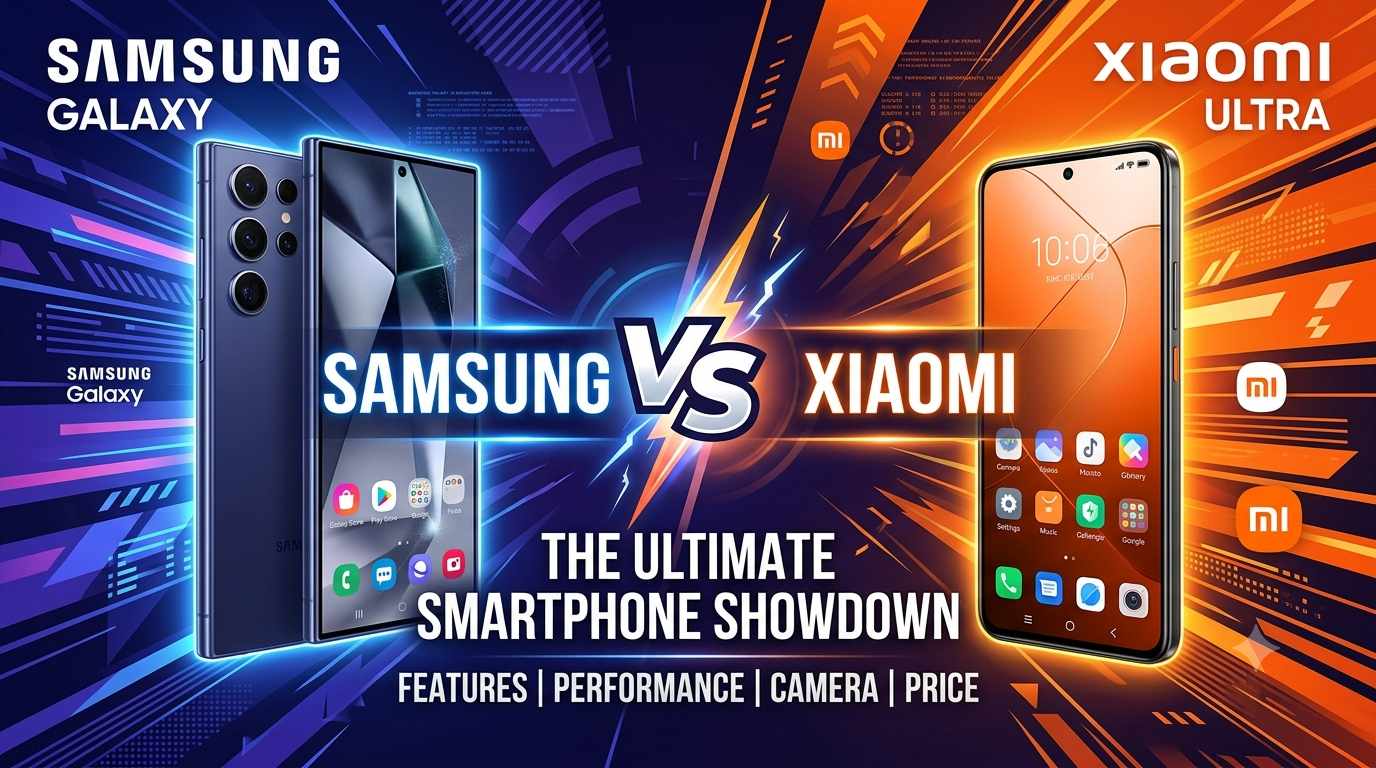
When it comes to buying a new smartphone in the region, the head-to-head battle between Samsung and Xiaomi presents one of the biggest dilemmas for consumers across Kuwait and the entire Gulf Cooperation Council (GCC) region. On one hand stands the South Korean tech titan Samsung, widely acclaimed for its premium AMOLED displays, durable build quality, and long-term software support. On the other hand is the Chinese tech power house Xiaomi, which has disrupted the market by delivering flagship-level specs at remarkably competitive price points.
If you find yourself facing the same predicament as Hamad, there is no need to worry. In this detailed guide, we will examine every dimension of the Samsung vs Xiaomi matchup to help you make a well-informed choice and maximize the value of your hard-earned money.
Samsung vs Xiaomi – Quick Comparison
First, let us take a look at a quick head-to-head comparison highlighting the primary specifications and key strengths of both brands:
| Feature | Samsung | Xiaomi |
|---|---|---|
| Price Range | Starts at KWD 25 (From M/A Series to S Ultra) | Starts at KWD 20 (From Redmi/Poco to Xiaomi Flagship) |
| Display | Super AMOLED / Dynamic AMOLED 2X | AMOLED / CrystalRes AMOLED |
| Camera | Natural color science, exceptional 4K/8K video stabilization | High megapixel count, Leica professional tuning |
| Performance | Exynos / Qualcomm Snapdragon | Qualcomm Snapdragon / MediaTek Dimensity |
| Battery | 5000mAh – 6000mAh | 5000mAh – 5500mAh |
| Charging | 25W to 45W (In-box charger not included) | 33W to 120W HyperCharge (In-box charger included) |
| Software | One UI (Clean, secure, and reliable) | HyperOS (Lightweight, feature-rich) |
| Updates | 4 to 7 years of Android OS updates | 3 to 4 years of OS updates |
| 5G | Available (Tested across all Gulf 5G networks) | Available (Comprehensive 5G band support) |
| Best For | Long-term usage, software security, video capture | Value for money, heavy gaming, ultra-fast charging |
Samsung vs Xiaomi – Price Comparison
When analyzing affordability, the direct rivalry between Samsung and Xiaomi becomes particularly intriguing. Across major electronics retailers in Kuwait—such as LuLu Hypermarket and Xcite Alghanim—the market pricing breaks down into distinct segments:
| Price Bracket | Category | Market Analysis & Overview |
|---|---|---|
| KWD 35 – KWD 50 | Entry-Level | Xiaomi (Redmi) holds a clear advantage in this tier by providing high refresh-rate AMOLED displays and superior processing power, whereas Samsung budget offerings remain relatively basic in specifications. |
| KWD 50 – KWD 100 | Mid-Range | A fierce competition takes place here. The Redmi Note lineup offers rapid 120W HyperCharge capability alongside curved screens, while the Samsung Galaxy A-series attracts buyers with robust brand prestige and a polished user experience. Flexible Xcite Easy Credit EMI plans are widely utilized in this price band. |
| KWD 100 – KWD 180 | Upper Mid-Range | Samsung FE (Fan Edition) devices deliver flagship-like capabilities in this segment. Conversely, Xiaomi T-series models consistently lead in raw processing power and synthetic benchmark scores. |
| KWD 180+ | Flagship Segment | Samsung commands the flagship realm with its Galaxy S Series (such as the S24 Ultra / S25 Ultra) and foldable Z Fold/Flip lines. While Xiaomi challenges aggressively via top-tier flagship lines featuring Leica optic engineering, Samsung retains a distinct edge in overall brand equity and long-term trade-in resale value. |
Samsung vs Xiaomi – Display Comparison
Given the intense sunlight and arid climate conditions across the Gulf region, display performance and outdoor legibility are critical factors when selecting a smartphone.
AMOLED Quality
As a leading display manufacturer, Samsung Display equips its devices with Dynamic AMOLED 2X panels, delivering vibrant color calibration, high contrast, and striking visual depth. Xiaomi matches this competitiveness by utilizing 12-bit CrystalRes AMOLED panels in its mid-range and flagship lineups, offering vivid color accuracy and excellent clarity.
Refresh Rate & Brightness
Both brands standardly equip their smartphones with high 120Hz and 144Hz refresh rates across mid-range and flagship models, ensuring fluid animations, smooth UI navigation, and responsive gaming.
Curved vs Flat Displays & Outdoor Readability
Xiaomi incorporates elegant curved displays even in its mid-tier models, appealing to users who prefer sleek aesthetics. In terms of outdoor visibility under harsh Gulf sunlight, both manufacturers offer high peak brightness levels. However, Samsung’s advanced anti-reflective display coating provides a measurable advantage in minimizing glare and preserving screen readability outdoors.
Samsung vs Xiaomi – Camera Comparison
Camera hardware and image processing highlight two fundamental philosophies in the Samsung vs Xiaomi rivalry.
Daylight Photography
In bright lighting conditions, Samsung produces vibrant, saturated photos that are immediately social-media ready. In contrast, Xiaomi leverages Leica camera optics and color profiles to deliver a more natural, cinematic aesthetic.
Night Photography
Samsung’s low-light Nightography processing algorithms extract notable shadow detail and keep noise low even in extremely dark environments. Xiaomi delivers strong low-light capability as well, though its image processing occasionally applies noticeable software sharpening.
Portrait & Selfie Performance
In Portrait mode, Samsung delivers precise edge detection and natural skin tone reproduction. For front-facing cameras, Samsung retains realistic facial detail, whereas Xiaomi tends to apply subtle skin-smoothing background beautification features by default.
Video Recording & Stabilization
For content creators filming social media reels or travel vlogs, Samsung’s Optical Image Stabilization (OIS) paired with its 4K and 8K video stabilization provides highly stable and consistent footage across dynamic environments.
Samsung vs Xiaomi – Performance Comparison
Which smartphone maintains sustained peak performance during intensive multitasking and prolonged gaming sessions?
Processor & Synthetic Benchmarks
Xiaomi frequently integrates high-end Snapdragon or MediaTek Dimensity chipsets even in lower budget tiers, yielding higher synthetic benchmark scores. Conversely, Samsung often equips its mid-range devices with in-house Exynos processors, which excel in daily operations but may experience thermal throttling under heavy, continuous processing loads.
Gaming Performance (PUBG Mobile & Resource-Intensive Titles)
For users prioritizing mobile gaming and sustained high FPS (frames per second), Xiaomi generally offers higher graphics fidelity and smoother frame stability within identical price brackets.
Thermal Management & Heat Control
Effective heat dissipation is vital given the high ambient temperatures of the Gulf region. Xiaomi utilizes specialized LiquidCool technology across its performance-focused lineups, while Samsung employs large Vapor Chamber cooling assemblies in its flagship tier to manage internal thermals during extended usage.
Samsung vs Xiaomi – Battery & Charging Comparison
When evaluating charging speeds, Xiaomi leads with industry-pushing fast-charging innovations.
Battery Capacity & Endurance
Both manufacturers standardly feature substantial 5000mAh to 6000mAh batteries across their lineups, delivering full-day battery life even under typical daily workloads.
Charging Speeds & HyperCharge Technology
Xiaomi integrates high-speed 67W to 120W HyperCharge technology, enabling full battery replenishments in approximately 15 to 20 minutes. Meanwhile, Samsung continues to utilize more conservative 25W to 45W charging standards across its smartphone lines.
In-Box Accessories & Retail Packaging
Samsung omits charging bricks from its retail boxes, requiring users to purchase power adapters separately. Conversely, Xiaomi includes high-wattage fast chargers and protective cases directly inside the retail package. Fast chargers and accessories can also be purchased through major regional outlets such as LuLu Hypermarket.
Samsung One UI vs Xiaomi HyperOS
Software experience and long-term operating system support form one of the most critical differentiators in this comparison.
User Interface (UI)
Samsung’s One UI is highly mature, visually polished, and engineered specifically for ergonomic one-handed operation. On the other hand, Xiaomi’s new HyperOS provides a lightweight architecture, fluid system animations, and deep ecosystem interconnectivity.
Bloatware & Ad Integration
Xiaomi’s budget-tier smartphones may include pre-installed applications (bloatware) and occasional system-level notifications. Conversely, Samsung delivers a cleaner experience with minimal advertising across its software suite.
Security & Knox Ecosystem
Samsung integrates hardware-backed Samsung Knox Security, widely regarded as a benchmark for enterprise-grade protection, providing an additional layer of security for personal data and mobile banking applications.
Samsung vs Xiaomi – Software Updates Policy
Long-term software support and update frequency are crucial determinants of a smartphone’s longevity and resale value.
Samsung Update Commitment
Samsung guarantees 4 years of major Android OS upgrades and 5 years of security patches for its mid-range Galaxy A-series lineup. For flagship devices—including the Galaxy S-series and Z-foldables—Samsung commits to an industry-leading 7 years of full OS upgrades and security maintenance. Further details can be checked via the Samsung Mobile Security Portal.
Xiaomi Update Commitment
Xiaomi typically provides 3 to 4 years of major OS upgrades across its smartphone tiers. While recent flagship and select mid-tier models under HyperOS receive extended support, rollout schedules and update delivery speeds across secondary devices remain comparatively slower than Samsung’s structured update timeline.
Samsung vs Xiaomi – Build Quality & Design
Build materials and environmental ingress protection are key indicators of physical durability, especially in dusty and high-temperature environments.
Materials & Structural Durability
Xiaomi distinguishes itself in the entry and mid-range tiers by offering premium glass back panels across many budget models. Conversely, Samsung often utilizes high-grade polycarbonate composite (“Glastic”) constructions in its budget and mid-tier Galaxy devices, reserving premium Gorilla Glass and Armor Aluminum frame designs for its higher-end series.
IP Rating & Water Resistance
Samsung leads in environmental protection by standardizing robust IP67 or IP68 water and dust resistance ratings even in its mid-range Galaxy A-series models, safeguarding devices against accidental immersion. Outside of its flagship tier, Xiaomi generally provides splash-resistant IP53 or IP64 protection. More specifications can be explored through retail partners such as Xcite Alghanim.
Samsung vs Xiaomi – Frequently Asked Questions (FAQs)
Which is better overall: Samsung or Xiaomi?
The choice depends on user priorities. Samsung is the preferred choice for long-term software support, a clean user experience, and enterprise security. Conversely, Xiaomi excels in providing higher specifications, faster charging, and greater value per price point.
Which brand offers better camera performance: Samsung or Xiaomi?
Samsung is widely recognized for natural color reproduction and video stabilization. However, in the flagship segment, Xiaomi models equipped with Leica optics deliver highly detailed, photographic-style imaging.
Which brand delivers better battery and charging capabilities?
While battery endurance is comparable across both brands due to similar capacities, Xiaomi holds a distinct advantage with its 120W HyperCharge technology for significantly faster recharge times. Latest models and official accessories are available across regional retailers such as LuLu Hypermarket.
Which brand is more suitable for gaming: Samsung or Xiaomi?
Xiaomi generally equips its mid-range and budget devices with higher-tier processors, making it a stronger contender for gaming performance within equivalent price brackets. Flexible installment options are accessible via Xcite Easy Credit EMI plans.
Samsung vs Xiaomi – Final Verdict
Ultimately, deciding between Samsung and Xiaomi depends entirely on individual usage requirements and personal priorities.
Who Should Choose Samsung?
For users seeking long-term longevity (3 to 5+ years), robust data privacy, a clean user interface, consistent video recording capabilities, and extended operating system support, the Samsung Galaxy Series remains the most comprehensive choice.
Who Should Choose Xiaomi?
For power users prioritizing intensive mobile gaming, maximum hardware specifications per dinar spent, and ultra-fast 120W in-box charging technology, Xiaomi delivers exceptional return on investment in Kuwaiti Dinars (KWD).
Recommendation: Before making a final purchase, testing both brands’ latest models in-store at major shopping centers or electronics retailers—such as LuLu Hypermarket or Xcite Alghanim—is strongly advised to evaluate hands-on ergonomics and user experience.