Introduction About OLED Smartphones
What are OLED Smartphones?
Simply put, OLED smartphones are premium mobile devices equipped with Organic Light-Emitting Diode displays. Unlike traditional screens, there are no separate backlight panels or external bulbs behind the panel; instead, every individual pixel generates its own light. This advanced technology relies on self-emissive display panels and organic light-emitting diodes to deliver superior illumination.
Why Are OLED Display Smartphones So Popular Today?
Modern tech-savvy users—whether located in India or navigating the materialistic and fast-paced environment of Kuwait—seek a visual luxury rather than just a standard mobile device. When streaming high-definition videos while relaxing at a cafe in Al Rai or elsewhere, the vibrant brightness and rich color accuracy elevate the viewing experience entirely. Consumers today specifically prioritize phones featuring an advanced AMOLED screen and a smooth high refresh rate display available across major shopping platforms like Lulu Hypermarket.
How Beneficial Is It to Buy an OLED Display Smartphone?
Investing in an OLED panel completely upgrades your day-to-day device interaction. Ranging from true black levels, infinite contrast ratios, and optimized battery conservation to an immersive cinematic entertainment experience, this technology leads across all performance metrics.
What Are OLED Smartphones?
What Is OLED Technology?
OLED represents an advanced display engineering approach that stands completely distinct from legacy LCD screens, offering superior light generation and structural efficiency.
How Does an OLED Display Work?
Unlike traditional panels that rely on a continuous background illumination source, OLED smartphones operate entirely differently. The architecture integrates a precise combination of thin-film transistors (TFT) and emissive organic compounds to control luminance at the micro-level.
How Is an OLED Panel Utilized in Smartphones?
The device processor communicates directly with every individual sub-pixel on the panel, dynamically regulating precisely when each microscopic point should illuminate or switch completely off to produce pitch-accurate visuals.
How Does OLED Display Technology Work?
What Are Organic Light Emitting Diodes?
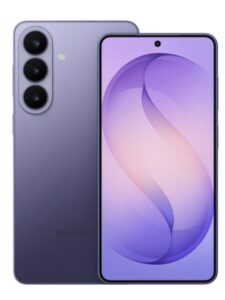
These consist of ultra-thin layers of carbon-based organic molecules that inherently illuminate the moment an electrical current is applied. This architecture can accurately be designated as an advanced emissive display panel.
What Are Self-Emissive Pixels?
This structural characteristic signifies that every individual pixel on the display functions independently, requiring zero reliance on secondary backlighting sources to produce imagery.
How Does Each Pixel Function Individually?
Whenever a dark sequence or shadow plays across the screen, the specific pixels corresponding to those areas within OLED smartphones switch completely into an off state.
How Is True Black Achieved in OLED Panels?

When a pixel goes completely dormant, absolute zero light leakage occurs. This technical precision is precisely why streaming web series or movies late at night offers deeply rendered blacks that provide a soothing experience for the eyes.
Key Features of OLED Smartphones
Explore the benchmark specifications and exceptional capabilities that make OLED mobile technology an industry standard. You can also check out exciting special offers and EMI plans on latest devices at Lulu Hypermarket.
| Feature Title | Technical & Visual Description |
|---|---|
| Deep Blacks and Infinite Contrast | Delivers absolute pitch darkness by completely turning off individual pixels, yielding an infinite contrast ratio that captivates the viewer. |
| Vibrant and Rich Colors | Produces exceptionally life-like chromatic saturation, making on-screen imagery and photos appear vividly immersive and realistic. |
| Better Viewing Angles | Maintains flawless color fidelity, contrast, and brightness integrity even when the device is viewed from wide or sharp side angles. |
| HDR Support | Brings authentic cinematic-grade dynamic range directly to the palm of your hand for high-end multimedia consumption. |
| Power Efficiency | Optimizes battery longevity significantly when dark themes or system-wide dark modes are active, as inactive pixels consume zero power. |
| Slim and Lightweight Design | Eliminates the bulky background lighting module, allowing manufacturers to engineer ultra-slim, lightweight, and sophisticated smartphone bodies. |
| Always-On Display Support | Enables effortless viewing of time, dates, and essential notifications instantly without waking up the entire display panel. |
Advantages of OLED Smartphones
Once you experience the immersive visual standard of OLED smartphones, transitioning back to legacy LCD panels feels remarkably difficult. You can explore amazing special offers and EMI plans on top-tier handsets at Lulu Hypermarket. The core structural and performance benefits include:
| Advantage Parameter | Detailed Performance Benefit |
|---|---|
| Superior Display Quality | Delivers exceptional sharpness, crisp edges, and crystal-clear visual definition across all images and video playback formats. |
| Exquisite Color Accuracy | Rendered hues appear remarkably natural, vivid, and true-to-life without oversaturation or artificial color casting. |
| Reduced Battery Consumption | Activating system dark modes switches dark pixels entirely off, conserving valuable battery reserves throughout extended daily use. |
| Cinematic Viewing Experience | Provides an authentic, theatre-like media consumption experience right in the palm of your hand. |
| Enhanced Gaming Visuals | Creates a striking synergy of high contrast and responsive color calibration during high-intensity mobile gaming sessions. |
| Superior Contrast Ratio | Maintains a distinct, clear demarcation between dark shadows and bright highlights for enhanced depth perception. |
Disadvantages of OLED Smartphones
As a tech publication standard, it is essential to explore both the advanced merits and potential limitations of this technology. While looking for upgrades or checking out special offers and EMI plans at Lulu Hypermarket, understanding these constraints is equally important:
| Limitation Parameter | Detailed Technical Insight |
|---|---|
| OLED Burn-in Problem | Prolonged exposure to static elements like status bars or navigation keys over extended months can occasionally leave faint ghost images or persistent outlines on the panel. |
| PWM Dimming & Eye Comfort | Operating at lower brightness levels utilizes pulse-width modulation (PWM) cycles, which can occasionally induce minor visual fatigue or eye strain for sensitive users. |
| Higher Replacement Costs | Replacing an authentic original OLED module at authorized service centers involves higher component expenses compared to standard LCD screens. |
| Pixel Degradation Over Time | Organic compounds, particularly blue sub-pixels, naturally experience a gradual decrease in luminance output efficiency over years of heavy usage. |
| Outdoor Peak Brightness | Budget or entry-level OLED variants may exhibit lower outdoor legibility under direct, harsh sunlight compared to top-tier flagship displays. |
Best OLED Smartphones in 2026
If you are searching for a new device across markets like Xcite or Eureka, make sure to evaluate these standout categories for the year 2026. You can also look for incredible special offers and EMI plans available at Lulu Hypermarket:
| Device Category | Key Expectations & Performance Highlights |
|---|---|
| Best Budget OLED Smartphones | Offers accessible pricing paired with impressive OLED screen panels, making vivid display technology affordable for budget-conscious buyers. |
| Best Mid-Range OLED Smartphones | Delivers a seamless balance between cost and high-end performance, ensuring reliable execution for daily multitasking tasks. |
| Best Flagship OLED Smartphones | Features fluid high refresh rates, robust processors, and superior peak luminance levels suited for top-tier premium users. |
| Best Camera OLED Smartphones | Combines advanced optical sensors for photography with accurate screen color calibration to review and edit captures seamlessly. |
| Best Gaming OLED Smartphones | Integrates high touch-sampling rates and lag-free graphics processing for a professional-grade mobile gaming experience. |
| Best Battery Life OLED Smartphones | Provides extended battery endurance to easily support long, demanding work schedules and busy daily shifts. |
Important OLED Display Specifications
Before making a purchase decision or finalizing a deal, it is vital to verify these technical specifications thoroughly. You can explore exciting special offers and EMI plans on high-spec smartphones at Lulu Hypermarket:
| Technical Specification | Detailed Evaluation Metric |
|---|---|
| Display Resolution | Verify FHD+ (Full HD+) or QHD+ (Quad HD+) resolution standards to ensure exceptional visual clarity and sharp text rendering. |
| Refresh Rate (60Hz to 144Hz) | Higher refresh rates deliver butter-smooth scrolling animations, responsive navigation, and fluid visual transitions. |
| Peak Brightness | Opt for devices offering 1500+ nits of peak brightness to maintain flawless legibility under direct sunlight outdoors. |
| HDR10+ and Dolby Vision Support | Essential for multimedia enthusiasts to experience cinematic color depths and contrast while streaming OTT content. |
| Color Gamut | Wide DCI-P3 color gamut coverage ensures accurate, true-to-life color reproduction across photos and apps. |
| Touch Sampling Rate | Significantly accelerates touch feedback response times, giving competitive gamers a distinct tactical edge. |
| Screen Protection | Look for durable front protection layers like Gorilla Glass Victus or equivalent to safeguard against drops and scratches. |
OLED vs AMOLED: Which One Is Better?
Essentially, AMOLED is an advanced and modern evolution of standard OLED technology, initially popularized in the consumer market by Samsung. Traditional OLED panels were primarily utilized in large-screen televisions, whereas the ‘Active Matrix’ architecture was engineered specifically for smartphones to grant instantaneous, precise individual control over every single sub-pixel. You can also discover great special offers and EMI plans on these advanced devices at Lulu Hypermarket.
Key Factors That Matter Most to Everyday Smartphone Buyers:
Touch Response and Thickness: In ‘Super AMOLED’ or modern AMOLED configurations, the touch-sensing layer is integrated directly inside the display panel itself using in-cell touch integration. This engineering approach yields a remarkably slim device profile while delivering butter-smooth, lightning-fast touch registration upon every swipe.
Picture Quality: Both technological implementations deliver exceptional deep blacks and vibrant chromatic richness. During standard daily usage, discerning any noticeable difference in color fidelity between the two is virtually impossible.
Conclusion
When purchasing any contemporary smartphone today, whether the marketing specification reads OLED or AMOLED, both options will drastically elevate your visual consumption standard. Therefore, buyers do not need to feel confused or overwhelmed by technical branding terminology!
FAQs About OLED Smartphones
Find answers to common queries regarding OLED mobile technology. You can also check out attractive special offers and EMI plans on top smartphones at Lulu Hypermarket.
Q1: Do OLED smartphone screens degrade faster compared to LCD panels?
Answer: No, OLED screens do not degrade prematurely under normal usage conditions. However, leaving static images on display continuously for months at maximum brightness can potentially trigger burn-in issues. With balanced daily use, these panels function smoothly for years.
Q2: Are OLED displays clearly visible under harsh outdoor sunlight in regions like Kuwait?
Answer: Absolutely! Modern OLED smartphones feature high peak brightness capabilities ranging from 1500 to over 2500 nits, ensuring effortless legibility and clear visibility even under intense direct sunlight outdoors.
Q3: Do OLED displays consume more battery or help conserve power?
Answer: It depends heavily on your content consumption habits. Utilizing system-wide dark modes or dark wallpapers turns inactive pixels completely off, resulting in substantial battery savings. Conversely, displaying bright white backgrounds at peak brightness levels will increase power consumption.
Q4: What are the primary differences between OLED and AMOLED?
Answer: Fundamentally, both technologies rely on self-emissive pixel architecture. AMOLED is essentially an upgraded variation of basic OLED engineering that incorporates an active matrix layer, making it highly optimized and efficient specifically for mobile devices.
Conclusion About OLED Smartphones
As we bring this comprehensive discussion to a close, it is clear that when choosing a new smartphone, the display serves as the primary window through which you experience your entire digital world. You can also explore amazing special offers and EMI plans on top-rated devices at Lulu Hypermarket.
Based on technical research and practical evaluation, OLED smartphones today represent much more than a mere luxury; they have evolved into an essential standard for modern users. However, it remains wise to assess your individual usage requirements before finalizing a purchase.
We hope this guide proves to be a valuable resource for your next purchase decision. If you have any further questions or require assistance, please feel free to drop a comment below!